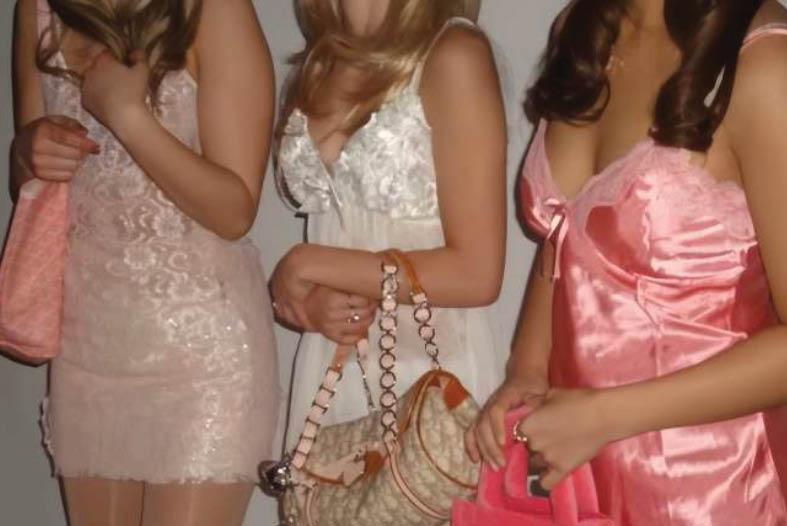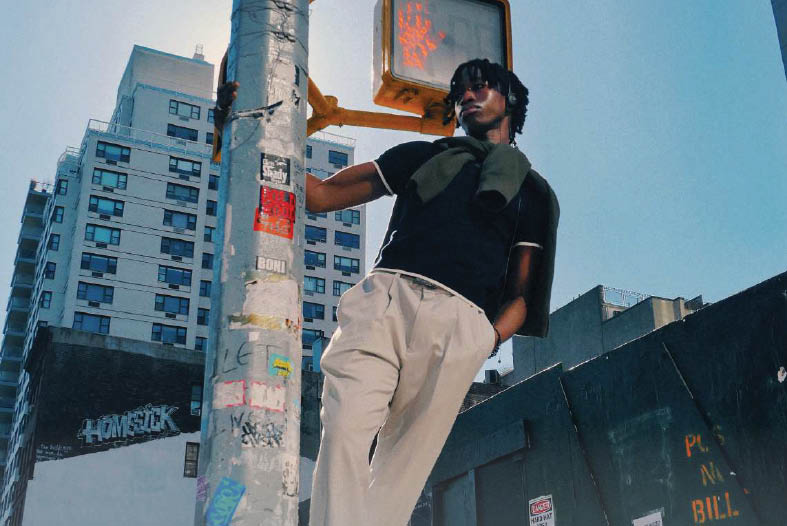
In our society, politics and fashion share a direct link. For what we cannot say, we create. Decades of artists have turned to their preferred mediums as a means of expression. Sharing stories, thoughts, and mere feelings, art has a way of communicating what words cannot express. When asked to imagine the face of change, our favorite artists are some of the first that might come to mind. The evocative street murals of Banksy, or Kendrick’s enigmatic lyricism; even Greta Gerwig’s 2023 Barbie adaptation can be pointed to as modern political inspiration. What many fail to consider when addressing politics through art, is the inherent politicization of fashion. We might recognize the face of change, but what about the fit?
1900-1910
On a warm Sunday in June of 1908, over 300,000 women gathered in London’s Hyde Park in the name of suffrage. Any crowd of that size is enough to garner public attention, but on this day, the movement achieved a new level of prominence by donning what would become the “suffragette tricolor,” purple, white, and gold. Often opting for a white dress with a tricolor sash, these uniforms became a recognizable staple for the movement. White went on to dominate the movement, an inexpensive, accessible color that most women had already hanging in their closets. Suffragette white is a prevailing symbol of feminism in modern politics. Hilary Clinton wore an ivory Ralph Lauren pantsuit at the 2016 Democratic National Convention where she accepted her nomination as the first female presidential candidate of a major political party. Three years later at President Trump’s State of the Union address, a number of female Democratic lawmakers wore white in solidarity with the nation’s women.
1950-1960
Fashion played a large role in the characterization of Black Americans during the Civil Rights movement of the 1950s and 1960s. In an effort to combat the stereotype of Black people as “lazy” and “ignorant,” “Sunday Best” became the look of the movement. Women wore tailored silhouettes like skirt suits and modest dresses with their hair pressed straight, while men opted for a sharply ironed button-up and tie underneath a classic suit. This style was mirrored by the movement’s most prominent leaders, including Dr. Martin Luther King Jr. and his wife, Coretta Scott King. The coincident Black Panther party, on the other hand, rooted their movement in the spirit of rebellion. Their iconic, androgynous uniform included leather jackets adorned with pinback buttons containing party slogans like “all power to the people,” or an image of founder Huey P. Newton. Party members wore their hair naturally under berets, and sunglasses to hide their identity from government surveillance.
1960-1970
November 22, 1963 marked a pivotal moment in history. It was the day in which John F. Kennedy, the 35th president of the United States, was assassinated. Jackie Onassis Kennedy, following this tragic event, refused to change out of her blood stained clothes. Mrs. Kennedy remained in her pink and black tweed suit set throughout Lyndon B. Johnson’s inauguration until her return to the White House the following day. Currently, this piece of clothing has not changed a bit since 1963. Locked away at the National Archives and Records Administration’s College Park Facility until at least 2103, Mrs. Kennedy’s famous suit is perfectly intact, having never been washed free of its blood stains. The former first lady, through this act, demonstrated the power of resilience. By preserving her outfit choice, Mrs. Kennedy conveyed that the American people must not be shielded from reality. According to People Magazine, a journalist who was present at the time of the event recalled in the 2023 docuseries, JFK: One Day in America, that Mrs. Kennedy uttered the words, “let them see what they have done”.
The style of anti-Vietnam War protestors played a substantial role in popularizing the movement. One of the most prominent articles of protest against the war were black armbands. While armbands had been worn in the past as a symbol of mourning, they became one of protest in the case of 13-year-old Mary Beth Tinker. Tinker was suspended along with four other students after wearing armbands to school. Three of the five students sued the Iowa school district in a case that moved into the Supreme Court, in which their suspension was ruled an infringement of their First Amendment rights. Long hair, bell bottoms, and loose silhouettes became characteristic of protestors, whose opposition to the war became a part of a larger shift against popular culture. Young people dressed in ways that defied social and gender norms, signaling an overarching pursuit of liberation.
1980-2008
T-shirts have long acted as key pieces in every wardrobe. During the 1980s, these staple items adopted a more political meaning, rising in popularity as a mode of protest. When meeting then-Prime Minister Margaret Thatcher in 1984, designer Katharine Hammett wore a t-shirt reading: “58% don’t want Pershing.” The shirt disapprovingly referenced the Pershing II, a missile sent to West Germany from the United States the year prior. In 1991, Japanese designer Hiroshi Fujiwara constructed a T-shirt inspired by the violent arrest of Rodney King. “End racism,” it read. The t-shirt has become a timeless uniform of protest in years following, becoming a staple in the Black Lives Matter and #MeToo movements. At the 2005 MTV Movie Awards, Ryan Gosling wore a t-shirt reading, “Darfur.” An advocate for human rights, Gosling has continuously raised awareness for the genocide in Darfur, Sudan. In July 2008, this renowned actor attended a panel in Washington D.C., addressing the acute situation in Darfur. On behalf of Enough Project, an organization aimed at ending genocide, Gosling spoke of his trip to a refugee camp in Darfur. The trip, according to an article published in NBC New York on July 9, 2008, acted as a life-changing event for Gosling. ”People in Darfur looked at me not like I was just some actor from Hollywood who was there to have an experience. They looked at me like I was somebody who could really do something. And I didn’t consider myself in that way. I can still see the way they looked at me.”
2010-2020
The 2017 Women’s March acted as a pivotal point in the fight against gender-based discrimination. Here, the “Pussyhat” became a symbol of second wave feminism and resistance against the current administration. Thousands of women wore handmade, knitted hats that symbolized women’s history of textile and domestic work. The hats took on another layer of meaning as a response to “vulgar” sexual comments made by President Donald Trump.
This decade also marked the resurgence of second hand clothing amid growing environmental concerns. Thrifting saw a rise in recent decades under Gen Z, who are one of the most active generations in the fight against climate change. While second hand garments don’t give activists a fixed recognizable look, they become a part of the work of the protestors and of the movement.
Today
Fashion has remained a part of the fight for social justice in recent years, most recently as a part of the conflict in the Middle East. Protesters looking to express support for Palestine are often seen wearing the keffiyeh: a traditional Arab headdress. Though they are made in a variety of colors, the Palestinian people have come to identify themselves with the black and white. According to Palestinian dress historian Wafa Ghnaim, the keffiyeh first became a garment of protest in 1936 during the Arab Revolt. After the start of the Israel-Hamas War in 2023, it became a symbol not only of Palestinian nationalism, but of solidarity from non-palestinians.
“Fashion functions as a mirror to our times, so it is inherently political,” Andrew Bolton, Head Curator at the Costume Institute at the Metropolitan Museum of Art, told Vogue. “It’s been used to express patriotic, nationalistic, and propagandistic tendencies as well as complex issues related to class, race, ethnicity, gender, and sexuality.”
Written by: Isabella Jambrina and Jada Lee